Quick Answer
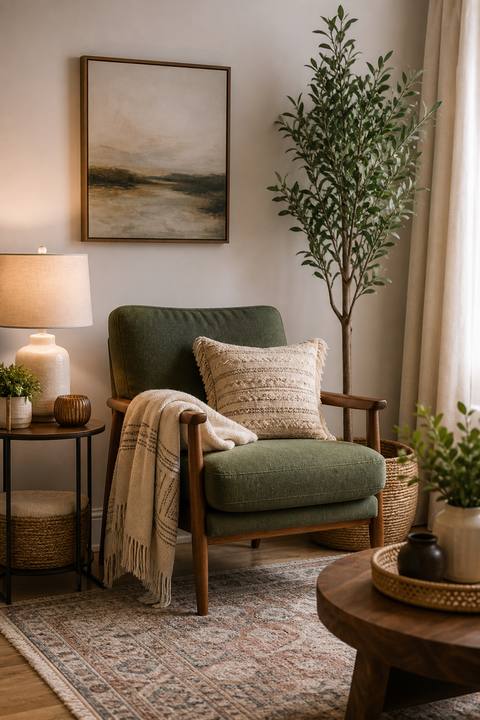
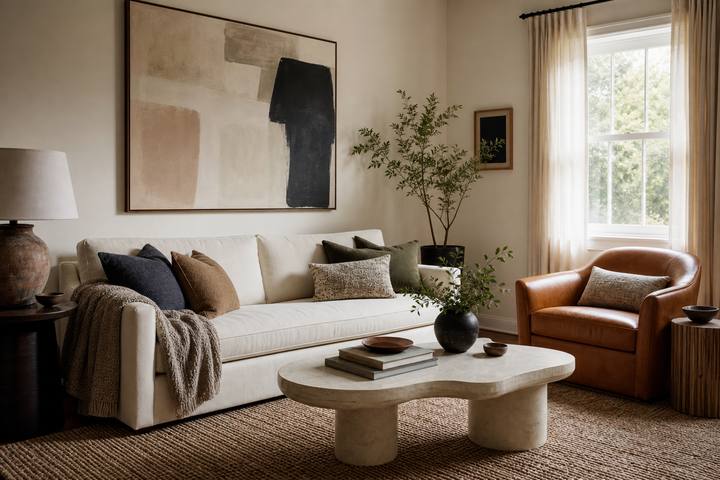
An accent chair finishes a room when it adds a missing shape, texture, or function while still relating to the sofa through color, scale, or material.
How To Use This Guide
Start with the room formula, then source-check products before shopping. Riverwood separates design advice from product claims; see our editorial standards and affiliate disclosure.
Budget Moves
- Buy one strong chair instead of two weak matching chairs.
- Look for texture, frame shape, and scale before brand name.
- Save on the side table if the chair silhouette is strong.
- Check dimensions carefully because accent chairs can photograph larger than they are.
- Make a cardboard or tape outline before ordering larger furniture.
- Check delivery, assembly, return, and restocking rules before treating the price as the real cost.
Use the chair to solve a room problem
Before shopping, decide what the room lacks. A square sofa may need a rounded chair. A neutral room may need woven texture. A conversation area may need one more usable seat.
Match mood, not the set
A chair does not need to match the sofa. It should share one idea: a repeated wood tone, a related fabric temperature, or a similar level of visual weight.
- Repeat one finish
- Keep seat heights compatible
- Avoid adding a second loud pattern unless the room is already controlled
Place it where it has a job
A chair floating in a corner can look like filler. Angle it toward a sofa, pair it with a small table, or give it a lamp so it becomes a reading or conversation zone.
How to judge the piece in a real room
Use accent chairs that make a room feel finished as a room decision, not a product-photo decision. Check the wall width, nearby furniture height, door swing, walkway, and the view from the room entrance before deciding that a piece works.
- Measure the furniture footprint and the open space around it
- Compare the height to nearby seating, tables, windows, or art
- Check whether the shape adds contrast or repeats too many existing lines
What makes the budget version look better
Budget furniture usually looks stronger when the silhouette is simple, the material language is honest, and the styling around it is edited. The goal is not to hide that a piece is affordable; it is to make the room feel intentional enough that the price point is not the first thing people notice.
- Choose cleaner arms, legs, fronts, or bases over extra decoration
- Repeat one finish elsewhere so the piece feels connected
- Use lighting, rug scale, or art scale to support the furniture
Common mistakes to avoid
The common mistake with accent chair ideas for living room is buying from a single pretty image instead of checking how the idea works with the room's actual scale, light, traffic, and existing finishes.
- Buying several small fillers instead of one better-scaled piece
- Ignoring height relationships between furniture, lighting, art, and windows
- Using too many finishes when one repeated material would calm the room
- Publishing product claims before checking the source page
Source-check rules before it becomes shoppable
Riverwood can turn this into a product roundup only after each product is checked against the source page. That protects readers from stale prices, vague material claims, mismatched dimensions, and unsupported review language.
- Record the product URL and date checked
- Confirm dimensions, materials, color name, care notes, and return rules
- Do not claim comfort, durability, or performance without testing or reliable source support
- Use retailer images only when image rights and affiliate rules allow it
Frequently Asked Questions
Do accent chairs need to match each other?
No. They can be different if they share a color, fabric family, wood tone, or similar visual weight.
What is the easiest accent chair style to use?
A simple upholstered chair or woven-frame chair is usually easiest because it works across transitional, organic modern, and modern farmhouse rooms.
What should I check before shopping for accent chair ideas for living room?
Check measurements, existing finishes, room traffic, return rules, material language, and whether the piece solves a real room problem instead of only looking good in a product photo.
How does Riverwood keep these ideas source-safe?
Riverwood keeps design guidance separate from product claims. Prices, stock, materials, dimensions, reviews, and performance claims are added only after source checks and affiliate-policy approval.