
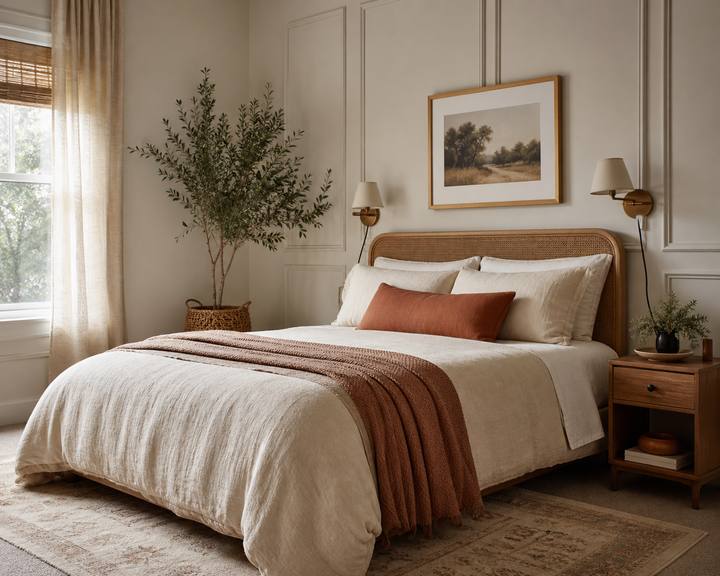
Quick Answer
Budget curtains look more custom when they are hung high and wide, have enough fullness, and use simple fabric colors that relate to the room palette.
How To Use This Guide
Start with the room formula, then source-check products before shopping. Riverwood separates design advice from product claims; see our editorial standards and affiliate disclosure.
Budget Moves
- Use simple rods and put the budget into better panel fullness.
- Choose linen-look, cotton, or textured neutrals for versatility.
- Check panel width, length, lining, and care instructions.
- Do not make blackout or privacy claims unless confirmed by the source.
- Create a short shopping list before browsing so the room goal controls the purchase.
- Do not compare savings until shipping, returns, and replacements are considered.
Hang high and wide
Mounting rods above and outside the window frame can make ceilings feel taller and windows feel larger. Measure before buying panels or rods.
Buy enough fullness
Thin, stretched panels can make a room feel unfinished. Wider panels or multiple panels per side often look more generous.
Layer function and softness
Shades can solve privacy and light control while curtains add softness. The combination can look intentional even when neither element is custom.
How to turn the idea into a buying plan
For curtains, drapes, and shades on a budget, start with the highest-impact visual problem before opening retailer tabs. Decide whether the room needs scale, softness, light, storage, or contrast, then build the shopping list around that one problem.
- Name the room problem before naming a product
- Fix the largest visual gap first
- Keep source notes beside every possible product
Where the savings usually are
The best savings are usually not the cheapest item. They come from buying fewer pieces, choosing flexible pieces, and avoiding returns caused by missed measurements or unclear source details.
- Prioritize flexible pieces that can move rooms
- Avoid fragile trend buys unless they are easy to swap
- Check dimensions, care notes, return rules, and image rights before publishing
Common mistakes to avoid
The common mistake with curtains on a budget is buying from a single pretty image instead of checking how the idea works with the room's actual scale, light, traffic, and existing finishes.
- Buying several small fillers instead of one better-scaled piece
- Ignoring height relationships between furniture, lighting, art, and windows
- Using too many finishes when one repeated material would calm the room
- Publishing product claims before checking the source page
Source-check rules before it becomes shoppable
Riverwood can turn this into a product roundup only after each product is checked against the source page. That protects readers from stale prices, vague material claims, mismatched dimensions, and unsupported review language.
- Record the product URL and date checked
- Confirm dimensions, materials, color name, care notes, and return rules
- Do not claim comfort, durability, or performance without testing or reliable source support
- Use retailer images only when image rights and affiliate rules allow it
Frequently Asked Questions
How high should curtains be hung?
Often several inches above the window trim, or closer to the ceiling when proportions allow, but measure the room before buying.
Are curtains or shades better?
Shades are often better for function; curtains are better for softness. Many rooms benefit from both.
What should I check before shopping for curtains on a budget?
Check measurements, existing finishes, room traffic, return rules, material language, and whether the piece solves a real room problem instead of only looking good in a product photo.
How does Riverwood keep these ideas source-safe?
Riverwood keeps design guidance separate from product claims. Prices, stock, materials, dimensions, reviews, and performance claims are added only after source checks and affiliate-policy approval.